Punjab Chief Minister Maryam Nawaz Sharif on Wednesday announced 10 major initiatives for farmers, including the first Apna Kisan Bank, interest-free loans of up to Rs100 million, higher Kisan Card financing and a special package for olive cultivation.
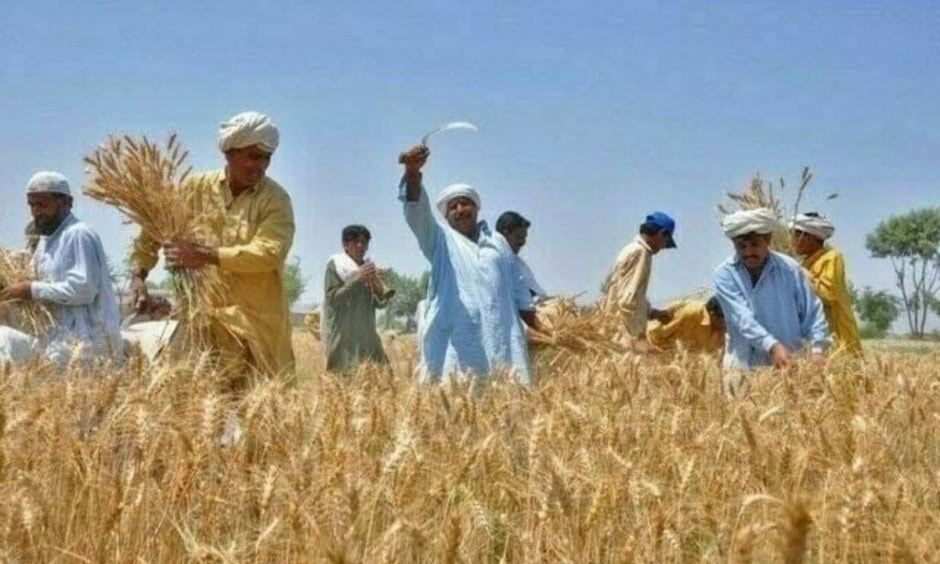
Addressing a gathering of small, medium and large farmers, she said the government would implement the wheat support price of Rs4,500 per maund, in line with the decision of the federal government. She also raised the Kisan Card loan limit by Rs3,500 per acre, from Rs30,000 to Rs33,500.
Under the proposed financing arrangement, farmers can obtain loans of up to Rs100 million at zero markup. Loans of up to Rs300 million will carry a two per cent interest rate, and those of up to Rs500 million a five per cent rate.
The chief minister said the government was providing Rs17 billion in subsidised agricultural loans. More than one million small farmers are benefiting from the Kisan Card scheme, with digitalisation ensuring merit-based disbursement and reducing dependence on middlemen. She said loan recovery remained close to 100 per cent, and steps were being taken to include tenant farmers and leaseholders in the programme.
She said Punjab meets around 70 per cent of the food requirements in the country. She added that the government had resisted International Monetary Fund (IMF) pressure over agricultural income tax and kept fertiliser supplies and prices under control.
On mechanisation, she said 25,000 tractors had already been provided on subsidy, while 50,000 more were being offered under the Green Tractor Scheme. The government is allocating Rs70 billion for high-tech agricultural mechanisation. Local companies produce around 30,000 tractors, and the province is set to establish its first harvester assembly and tractor manufacturing plants.
Agro-processing parks are being set up in Sargodha, Bhakkar, Khanewal and Okara. They will provide grading, processing and storage facilities for mangoes, kinnow, oranges, potatoes and other crops to reduce post-harvest losses and support exports. She said higher wheat output would also allow the export of value-added products such as pasta.
Under the Apna Khet, Apna Rozgar initiative, farmers are receiving incentives and financial assistance for wheat cultivation. A wheat procurement plan and an online portal for digital processing will be launched soon. The government has deployed 1,500 agriculture interns, each paid Rs70,000 per month, and is introducing mobile soil-fertility and water-testing laboratories.
On irrigation, the chief minister said the government was providing high-powered irrigation systems and building 400 mini dams in the Potohar region. Watercourses will be lined, canal desilting improved and the campaign against water theft continued.
She also announced a special package and subsidies for olive cultivation and congratulated Pakistan on becoming a permanent member of the International Olive Council, after previously holding observer status.
In livestock, 400,000 animals were fattened last year, and the government aims to prepare another 600,000 this year. The chief minister urged farmers to stop burning crop residue to help combat smog and said their proposals would be considered for implementation in phases.
Provincial Agriculture Minister Ashiq Hussain Kirmani thanked the chief minister for dedicating her birthday to farmers and said value-addition projects were being launched to secure better returns for growers.
Farmers Hassan Raza, Amir Hayat Bandesha, Bilal Khan and Sajjad Ali welcomed the wheat support price, the Kisan Card and the campaign against water theft. Bilal Khan said olives grown in Punjab could be ready for export within two to three years.