Anthropic just announced a groundbreaking discovery about Claude’s latest medicinal discovery. Claude discovered a novel enzyme system in bacteriophages using a system called array-associated reverse transcriptases. Functionally, this system resembles CRISPR technology.
As the company puts it:
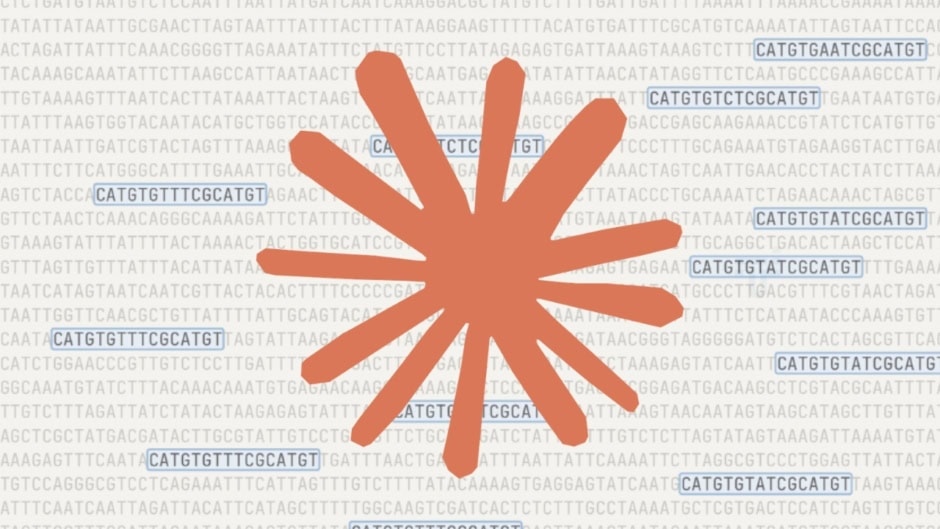
The system it found, [array-associated reverse transcriptases] ART, is found mainly in bacteriophages and consists of three parts: the RT, a partner gene beside it, and a long array of evenly spaced DNA repeat sequences. The repeat layout resembles a CRISPR array, which holds a bank of different RNA sequences that make CRISPR-Cas systems programmable biotechnological tools. Our first experiments show that the ART array is also expressed as a set of distinct short RNAs, suggesting that something analogous may be at play for this system.
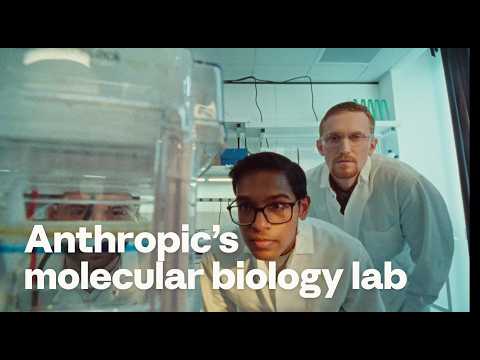
Anthropic launched a dedicated life sciences research lab in spring 2026. The team operates from their Bay Area facility conducting molecular biology research.
The discovery arrives as the global AI drug discovery market reaches $7.94 billion annually. Meanwhile, AI platforms compress early discovery phases from five years down to months. Companies like Recursion Pharmaceuticals and Insilico Medicine lead this transformation globally. These firms use machine learning to analyze massive biological datasets. Target identification now relies on computational analysis before wet-lab validation begins. Consequently, this shift represents a fundamental change in how discovery proceeds.
Claude’s discovery demonstrates how AI systematizes biological hypothesis generation at scale. Anthropic trained AI agents to search massive DNA sequence databases autonomously. The agents looked for interesting new examples of reverse transcriptases. Over twenty-one hours, approximately nine hundred fifty agents used two hundred ten million tokens. During this search, one agent identified something remarkable. It spotted repeating DNA sequences next to an unusual RT gene. Notably, this pattern resembled known CRISPR systems but hadn’t been characterized before.
Feng Zhang, one of the pioneers of CRISPR genome editing and a professor at MIT and the Broad Institute said:
This is an exciting example of how AI agents can contribute to biological discovery. The identification of RNA-repeat arrays associated with reverse transcriptases is genuinely intriguing and merits further investigation. I hope this work encourages more scientists to explore how AI can support their research.
The system Claude discovered consists of three distinct biological components. First, a reverse transcriptase enzyme copies RNA into DNA. Second, a partner gene sits next to the RT with unknown function. Third, an array of evenly spaced DNA repeats forms the system’s backbone. These repeats resemble CRISPR arrays, which store genetic instructions. Early experiments show the ART array expresses distinct short RNAs. Therefore, something analogous to CRISPR’s programmable mechanisms might operate here.
Notably, over a dozen AI-designed drug candidates entered human clinical trials in 2026. Insilico Medicine signed an eight hundred eighty-eight million dollar partnership with Servier. Earendil Labs secured $2.56 billion dollar deal with Sanofi. These partnerships underscore pharmaceutical industry confidence in AI-driven discovery platforms. Phase III trials will test whether AI improves success rates beyond ninety percent failure rates. However, skeptics question whether AI accelerates timelines without improving outcomes fundamentally.
Feng Zhang, MIT’s CRISPR pioneer, strongly endorsed Claude’s discovery. He praised AI agents’ capacity to contribute to biological discovery. This validation legitimizes Claude’s autonomous research capability substantially. The discovery validates Anthropic’s vision of human-AI collaboration in science.
Pakistan’s biotech and pharmaceutical sectors could benefit from such discoveries substantially. AI-assisted enzyme discovery could accelerate drug development pipelines regionally. Training Pakistani scientists in AI-driven biology research opens emerging career opportunities. Anthropic plans expanded collaboration with scientists worldwide on additional research problems. Regional participation in AI-driven research becomes increasingly feasible for developing economies.